ReadingDoctor® is one of very few digital phonics programs that has been directly evaluated in independent, peer-reviewed research. Across studies involving different age groups and educational contexts, the findings have consistently supported improvements in the foundational reading skills targeted by the program.
Independent research on ReadingDoctor®
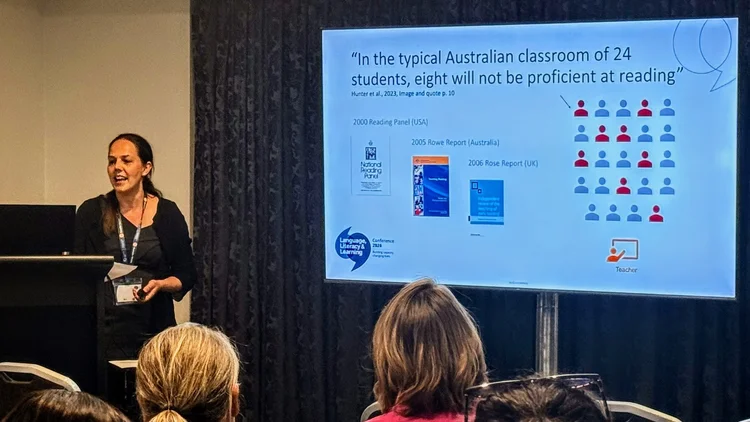
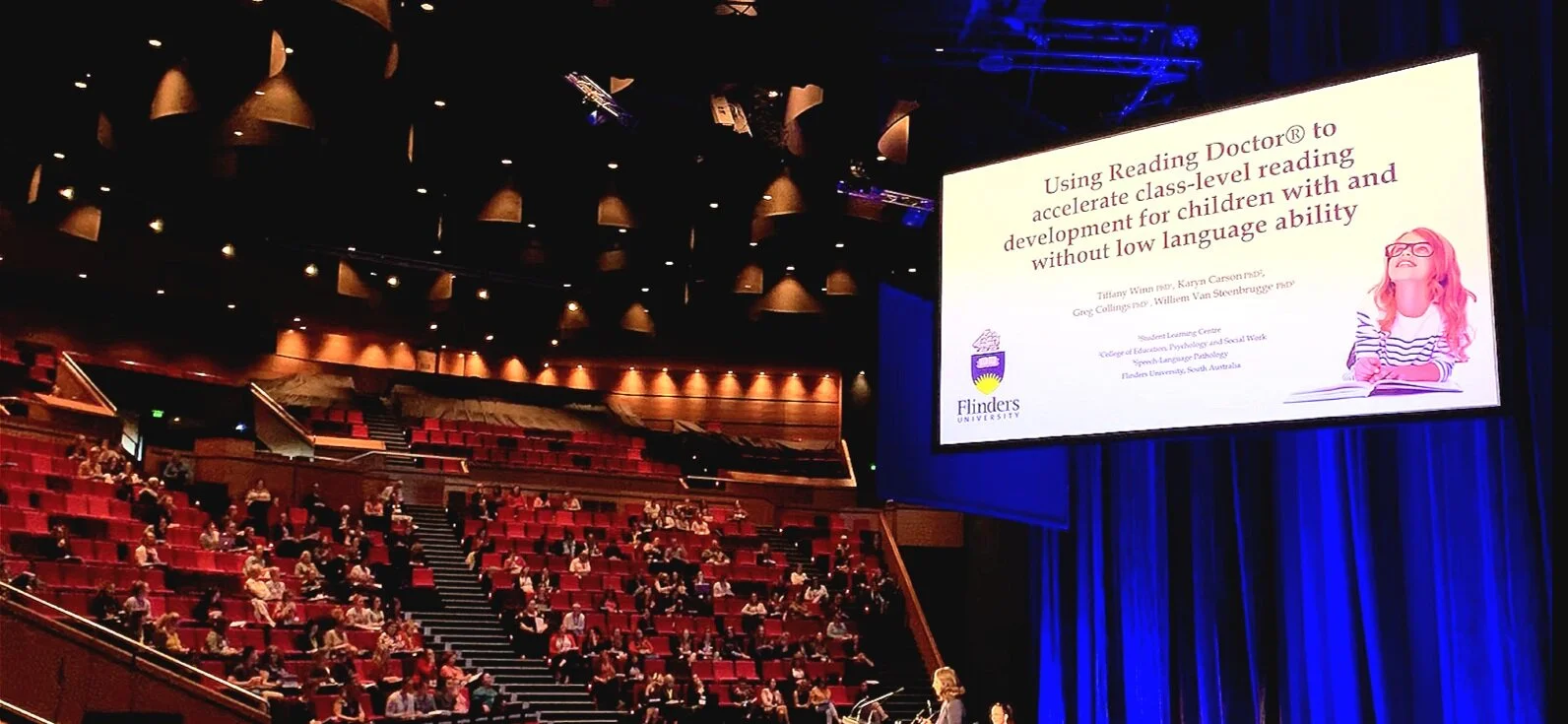
Grace et al. (2026): Flinders University study of ReadingDoctor® Online
The most recent and largest study of ReadingDoctor® was conducted independently by researchers at Flinders University. It investigated the effect of ReadingDoctor® Online letter-sound activities on children aged approximately 4–7 years using a waitlist-control design.
Children who used ReadingDoctor® showed large, statistically significant improvements in letter-sound knowledge compared with the control group. When the control group subsequently received ReadingDoctor®, their letter-sound knowledge also improved significantly.
The study also found that children benefited whether they used ReadingDoctor® at home or at school, and that children who completed more activities tended to make greater progress.
The findings have been submitted for peer-reviewed publication. Further details will be added when they become publicly available.
Read the preliminary Flinders University study summary
Summary of the research presented at the 2026 DSF Language, Literacy and Learning Conference
Carson (2019): preschool children with Developmental Language Disorder
A peer-reviewed study led by Dr. Karyn Carson at Flinders University investigated ReadingDoctor® with 24 preschool children with Developmental Language Disorder.
After eight weeks, children using ReadingDoctor® performed significantly better than the comparison group in:
phoneme blending
phoneme segmentation
letter-sound knowledge
phoneme–grapheme conversion during early decoding.
The reported effect sizes were large, ranging from d = 1.08 to d = 1.92.
Reference: Carson, K. L. (2019). Can an app a day keep illiteracy away? Piloting the efficacy of Reading Doctor apps for preschoolers with developmental language disorder. International Journal of Speech-Language Pathology, 22(4), 454–465.
View the study on PubMed
View the journal article
Winn, Miller & van Steenbrugge (2020): students with reading difficulties
A peer-reviewed study investigated ReadingDoctor® with 42 students aged 5–13 years who had reading difficulties.
After 12 weeks of intervention, students showed significant improvements in phonological awareness, phonemic awareness and word-reading efficiency. Importantly, these improvements were still evident three months after the intervention had finished.
Reference: Winn, T., Miller, J., & van Steenbrugge, W. (2020). The efficacy of a computer program for increasing phonemic awareness and decoding skills in a primary school setting for children with reading difficulties. Australian Journal of Teacher Education, 45(12).
Has the program changed since these studies?
The software has developed over time, but the teaching methodology used in ReadingDoctor® has remained consistent across all of the research studies.
The program continues to use the same core instructional approach: explicit and systematic teaching of phonemic awareness, phoneme–grapheme relationships, blending, segmentation, decoding and word recognition, with carefully sequenced practice and immediate feedback.
This means that although some earlier research evaluated previous ReadingDoctor® apps, the instructional methodology being studied is the same methodology that underpins ReadingDoctor® Online today.
Is the teaching approach itself evidence-based?
Yes. ReadingDoctor® is built around instructional approaches supported by a much larger body of reading research, particularly:
explicit phonemic-awareness instruction
systematic phonics
explicit instruction
cumulative practice and review
immediate corrective feedback.
Major reviews, including the National Reading Panel, have found that systematic phonics and explicit phonemic-awareness instruction improve children's reading and spelling outcomes.
National Reading Panel findings
The Australian Education Research Organisation also identifies explicit instruction as an evidence-based teaching practice.
Independent recognition
ReadingDoctor® is also included in Australian resources identifying evidence-based literacy programs.
The 2024 Reading Pledge, produced by Five from Five and Learning Difficulties Australia, lists ReadingDoctor® among interventions that have been shown to be effective in published experimental trials.
Download the 2024 Reading Pledge
AUSPELD's Understanding Learning Difficulties resources also include ReadingDoctor® among examples of evidence-based phonics programs and resources.
AUSPELD: Evidence-based phonics programs and resources
Overall
The research base for ReadingDoctor® is consistently positive.
Most importantly, ReadingDoctor® has been evaluated directly, not simply described as "evidence-based" because it incorporates phonics. Independent studies have found improvements in the specific foundational skills the program is designed to teach, including phonemic awareness, letter-sound knowledge, decoding and word reading.
ReadingDoctor® is best used as one component of a comprehensive literacy approach that also includes oral language, vocabulary and knowledge development, reading connected text, fluency, comprehension, writing and ongoing teacher assessment.
Was this article helpful?
That’s Great!
Thank you for your feedback
Sorry! We couldn't be helpful
Thank you for your feedback
Feedback sent
We appreciate your effort and will try to fix the article